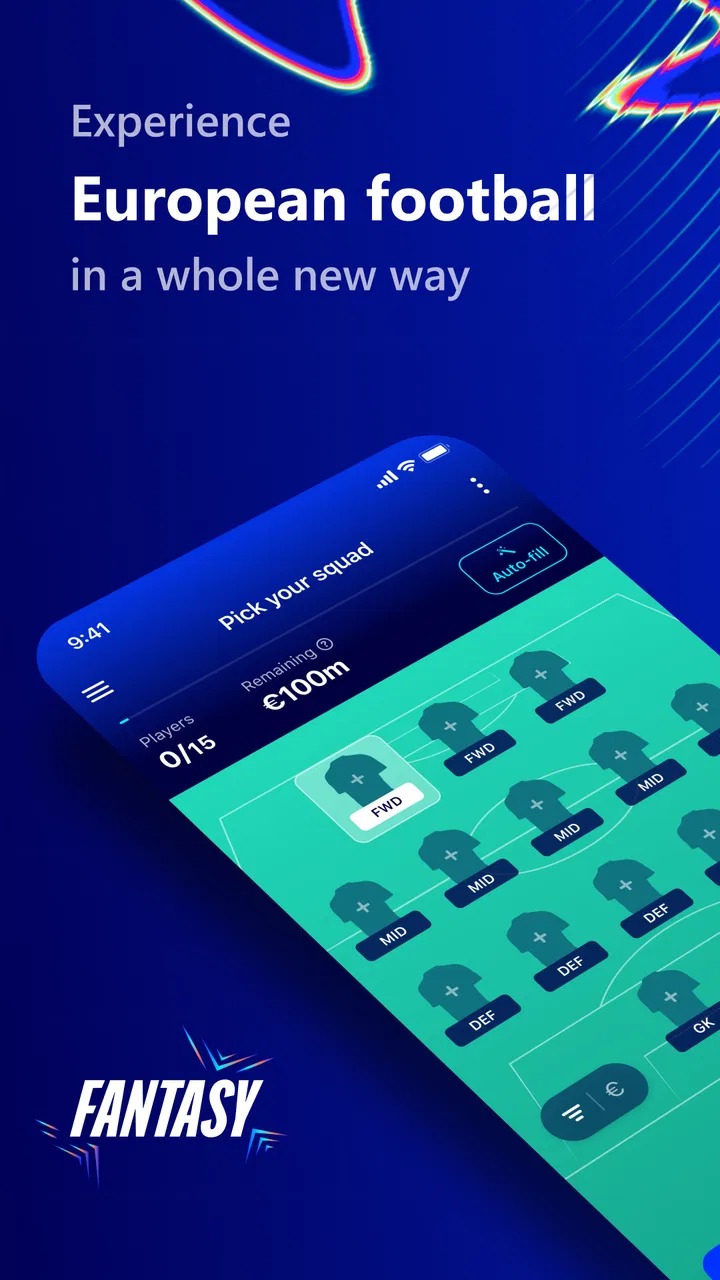
UEFA Gaming: Fantasy Football
- 4.8
- Rating
- 10.00M
- Installs
- Free
- Price

 Analysis by App-foxy
I approached UEFA Gaming: Fantasy Football as a fan who wanted more than a quick score check. This free sports game comes from UEFA and brings the Champions League and Europa League into a fantasy-football format. It is aimed at everyone rather than a narrow age group, and that broad positioning matters: the appeal is easy to understand, but the experience still asks you to read, compare, plan and keep returning during a busy football schedule.
My overall impression is positive, especially if you enjoy making decisions around real European matches instead of simply watching them. The game is not a replacement for a live-results app, and it is not the best choice for someone who wants an instant arcade match. Its value is in the small routine around football: checking the next round, weighing players, adjusting your team and seeing whether your choices hold up. The current version is 12.1.0, and the game supports devices running Android 7.0 or later.
How the fantasy experience feels to use
I find the fantasy side most rewarding when I treat it as a short planning ritual, not something to keep checking between every task. The useful question is less “Who is the biggest name?” and more “Which choices can I explain based on the round ahead?” That mindset makes the decisions feel clearer and gives the next section a practical focus: how to turn matchweek information into a manageable routine.
You May Also Like

 Google Keep - Notes and lists
Google Keep’s Quiet Growth Shows the Appeal of Simpler Notes
As mobile work gets busier, Google Keep keeps winning a simple contest: capture a thought quickly, find it later, and get on with the day.

 Blood Strike: 2.5 Anniversary
Blood Strike’s Loadouts Turn Every Drop Into a Tactical Gamble
A close look at Blood Strike’s custom loadouts: how fast access to signature weapons reshapes its battle royale rhythm, rewards preparation, and narrows the gap between fights.

 Pandora - Music & Podcasts
Pandora’s Music Is Easy to Start, but Harder to Recover
Pandora’s strength is its low-effort path from a seed to a station. Its weak spot is how much confidence it asks you to place in connection, setup, and quiet recovery.

 8 Ball Pool
 Is Built on Rivalries, Rematches, and Routine
A close look at the rivalries, rematches, shared routines, and unanswered safety questions that turn a quick pool match into a persistent mobile community.

 Samsung Music
’s Quiet Strength Is Playing What You Already Own
Its reach comes less from spectacle than from dependable access to a personal library. That simplicity is both the app’s strongest retention engine and its ceiling.

 AccuWeather: Weather Radar
AccuWeather Review: A Quick, Clear Forecast for Everyday Decisions
For everyday plans, the best forecast is the one you can understand quickly. AccuWeather makes rain timing, radar, and local conditions easy to act on, with a few trade-offs.
More From Our News Desk



Readability and navigation during a busy match week
The first thing I noticed is that this is a planning game disguised as a simple football companion. You are not only looking at names and selecting a lineup. You are repeatedly moving between the parts of the experience that help you decide: the competition context, your squad, upcoming fixtures and the consequences of leaving a player in or taking one out. That makes the navigation more meaningful than a basic list of results, although it also means that new players should spend a little time learning where each decision is made.
The football context helps. Because the game is built around UEFA’s Champions League and Europa League competitions, the teams and fixtures have a clear identity rather than feeling like an anonymous database. I found it easier to stay interested because every choice connected to matches I already wanted to follow. If you watch European football casually, the fantasy layer gives you a reason to pay closer attention to lineups, form and difficult fixtures.
Text-heavy screens are where the experience can become less comfortable. Fantasy football naturally involves player names, positions, fixture information and changing selections, so there is a lot to scan. On a small phone, I would not rush through the setup while travelling or between other tasks. A larger display, a quiet room and a little patience make comparisons easier. This is an important distinction: the game is approachable, but the amount of information is not always effortless.
I recommend developing a simple reading order instead of jumping around. I start with the next round, identify the matches I understand best, then review my squad and only afterward consider transfers or changes. That workflow reduces the temptation to react to one exciting name. It also makes the interface feel more manageable for anyone who finds dense sports screens tiring.
The game’s average rating is 4.8 from around 131 thousand ratings, with more than 10 million installs. Those figures suggest a large and satisfied audience, but they should not be mistaken for proof that every player will find the layout equally clear. Fantasy games reward familiarity. After a few sessions, the important areas become easier to recognize; on the first visit, the number of choices can feel more demanding than the short store description suggests.
Motor and sensory considerations
From a motor perspective, the experience is mostly about taps, scrolling and selecting players rather than fast reflexes. That is a genuine advantage for people who prefer deliberate interaction or cannot comfortably play games that require rapid swipes and repeated timed actions. You can think through a decision before committing it, which makes the game feel calmer than many sports titles.
That does not mean every interaction is equally comfortable. Fantasy management often involves small rows, compact controls and repeated movement through lists. Someone with limited precision may find it easier to use a larger phone, increase the device’s general text size where the operating system allows it, or rotate the device if the layout responds well. I would test those options before building a long-term routine around the game, because system-level changes can affect how much information fits on screen.
For players with visual fatigue, the best approach is to avoid treating the app as something to check continuously. I get more from it when I make one focused review rather than repeatedly opening every screen. A short session with a clear goal—checking the next fixtures, confirming the squad and closing the game—reduces the amount of dense reading and scrolling.
Hearing is less central here than in an action game. You can make the important fantasy decisions through visual information, so the experience is suitable for someone who does not want sound to be part of the interaction. On the other hand, visual clarity becomes more important because football context, player information and decisions are communicated through the screen. Anyone who depends on spoken guidance, very large text or highly customized contrast should try the game personally before assuming it will meet those needs.
A useful habit is to separate discovery from commitment. I first browse the available information, note a few candidates mentally, and only then make changes. This avoids accidental taps and gives players with slower or less precise movement more control. It is a small workflow change, but it makes the game feel less pressurized.
Situational access in everyday use
The most realistic use case for me is a short evening check before a European matchday. I can sit down with enough time to read the upcoming fixtures, consider whether a player is a sensible choice and leave the app without needing to play a full match. That suits people who enjoy football but have irregular schedules. You do not need a long uninterrupted session to get value from the fantasy side.
It also works well as a companion while watching a match, although I would not recommend making important decisions while distracted by the action. The game encourages attention to individual players and teams, so it can make a familiar fixture more engaging. Still, switching between television, conversation and a phone increases the chance of selecting something hastily. My better routine is to prepare before kickoff and use the live match mainly to enjoy the result of those decisions.
For commuters, the appeal depends on the quality of the connection and the conditions around them. I would not rely on it as my only football tool in a place where the screen is hard to read or the signal is unreliable. A crowded train, bright sunlight or one-handed use can turn careful fantasy planning into frustrating scrolling. This is not a criticism unique to UEFA Gaming, but it matters because the game’s strongest moments come from considered choices rather than quick entertainment.
The broad age rating of Everyone makes it suitable for families and younger football fans in principle, but I would still treat it as a game that benefits from guidance. A child who knows the teams may enjoy selecting a squad, while a younger player may need help understanding why a famous name is not always the best fantasy choice. The strategic lesson is actually one of the strengths: it encourages comparison instead of simply rewarding recognition.
It can also serve as a low-pressure social activity. Friends can discuss selections, disagree about likely performers and compare how their football knowledge translates into fantasy decisions. That is different from a competitive console football game, where the better controller skills often decide the result. Here, patience and observation have more room to matter.
What it does better than the usual alternatives
Compared with a standard football-results app, UEFA Gaming offers participation rather than only information. A results app is better when I need a fast score, a table or a notification and do not want to manage anything. This game is better when I want the fixtures to feel personal. Choosing a player creates a small stake in a match that I might otherwise watch casually.
Compared with a console or mobile action-football game, it is far less dependent on reflexes, graphics and controller comfort. I do not need to learn virtual dribbling or defend against another player in real time. That makes it a better fit for someone who enjoys football strategy but finds action games tiring, inaccessible or simply uninteresting.
Compared with a general fantasy-football platform covering many leagues, its focus on UEFA’s two major European competitions is both a strength and a limitation. The focused setting keeps the game connected to a recognizable calendar and makes it easier to follow if those tournaments are the reason you opened it. A broader platform may suit someone who wants domestic leagues, a larger player pool or one fantasy team spanning many competitions.
The trade-off is that UEFA Gaming depends heavily on your interest in those specific tournaments. If your attention is mainly on local leagues, international football or a different sport, the game will feel narrow rather than focused. I would choose it for a Champions League or Europa League routine, not as a universal fantasy manager.
Remaining barriers and points of friction
The biggest barrier is cognitive rather than physical. Fantasy football asks you to remember what you have already changed, understand the timing of a round and resist making decisions based only on reputation. Someone looking for a game that explains itself in a minute may lose patience. The official connection gives the experience credibility and context, but it does not remove the need to learn the fantasy routine.
Another limitation is the emotional cost of uncertainty. Even a thoughtful selection can perform badly, and a famous player can disappoint. That is part of fantasy football, not a fault in the app, but new players should know that the game rewards accepting imperfect outcomes. If you prefer predictable progress or direct control over every result, a puzzle game or action-football title may be more satisfying.
I also would not recommend it to someone who wants a fully passive experience. The game is free, which makes trying it easy, but its value comes from returning to review and adjust your choices. If you do not want another football-related routine, a results app will be more efficient. Likewise, people who dislike reading lists and comparing options may find the management layer more work than fun.
For accessibility, the sensible approach is personal testing rather than assuming the Everyone rating guarantees a comfortable experience for every ability. Check whether the text, spacing and touch targets work for you on your own device. Try the game in the situation where you expect to use it, not only in ideal indoor lighting. That practical test reveals more than a broad age label can.
There is also a useful discipline in limiting how often you make changes. I found that opening the game repeatedly can encourage overthinking. A planned check before a round is usually better than constant tinkering. This is a non-obvious strength of the format: it can become a compact football ritual, but only if you prevent it from turning into an endless stream of small decisions.
Who should try it, and who should skip it
I would recommend UEFA Gaming to football fans who follow European club competitions, enjoy making predictions and want a game that fits around real matches. It is especially suitable for players who prefer strategy and observation over fast controls. It also works for friends or families looking for a conversation starter during a tournament, because everyone can justify a selection in their own way.
I would be more cautious if you have limited patience for dense information, difficulty with small touch targets or a strong need for spoken or highly customized visual presentation. The game may still be usable, but those needs deserve a hands-on check. I would also skip it if your main goal is live scores, because a dedicated results tool will get you to that information faster.
The same applies to players seeking a complete football simulation. UEFA Gaming does not replace the feeling of controlling a match, building a career or competing through real-time play. Its pleasure is quieter: selecting, waiting, watching and reviewing. That narrow purpose is exactly why it can feel focused to one person and limited to another.
My inclusive verdict
After using it as a fantasy companion rather than expecting a full football game, I found a thoughtful free experience with a clear audience. UEFA, the developer, has built something that connects fantasy decisions to the Champions League and Europa League instead of burying the football identity under unrelated systems. The result is most enjoyable when I have time to read carefully and follow the competitions closely.
Its strongest inclusive quality is the absence of reflex pressure. Deliberate taps and planning make it more approachable than action-heavy sports games, and the Everyone age rating keeps the invitation broad. Its weaker side is the information load: compact screens, repeated comparison and the need to understand the fantasy rhythm can create barriers for players with visual, motor or cognitive accessibility needs.
With a comfortable device, a calm workflow and realistic expectations, I think it is worth trying. I would begin with one simple routine: check the next round, make only the changes I can explain, and review the result afterward. That approach exposes the game’s real appeal without demanding constant attention.
My recommendation is simple: choose it if you want to participate in UEFA football through decisions rather than controls. Skip it if you need instant scores, a broad multi-league manager or a fully accessible interface with extensive customization. For the right fan, this is a compact way to make European matchdays feel more personal, and its free entry makes that experiment easy.
FAQs for UEFA Gaming: Fantasy Football
01What is UEFA Gaming: Fantasy Football?
UEFA Gaming: Fantasy Football is an official football fantasy app from UEFA that lets you build and manage a virtual team using players from major UEFA competitions. You select a squad, choose a starting lineup, appoint a captain, and earn points based on real match performances. It is designed for football fans who enjoy strategy, statistics, and competing with friends or other users.
02How does scoring work in UEFA Gaming: Fantasy Football?
Your fantasy score is generally based on what selected players do during real matches, including goals, assists, clean sheets, saves, appearances, and other statistical actions. Players can also lose points for events such as missed penalties, cards, or conceding goals, depending on the competition rules. Always check the in-app scoring guide because rules may vary between UEFA tournaments and fantasy formats.
03Can I play UEFA Gaming: Fantasy Football with friends?
Yes, the app typically allows users to create or join private leagues, making it possible to compete directly with friends, family, colleagues, or supporters from the same club. Private leagues add a more personal challenge than the overall rankings, although you may need to share a league code or invitation. Availability and league options can depend on the active competition and season.
04Is UEFA Gaming: Fantasy Football free to download and play?
The app is generally free to download and use, allowing you to create a fantasy team without paying an entry fee. However, your device may require an internet connection, and standard mobile data charges can apply when using the app away from Wi-Fi. You should also review the store listing for any optional purchases, advertising, account requirements, or region-specific conditions before installing it.
05What should I know before creating my fantasy team?
Before choosing your squad, pay attention to the competition schedule, player prices, formation limits, transfer rules, and deadlines for making changes. A player who is injured, suspended, rotated, or facing a difficult opponent may not be a reliable selection. The app is most enjoyable when you regularly check team news, confirm lineups before deadlines, and manage transfers instead of selecting a team only once.
Pros
- Official UEFA competitions provide a credible fantasy football experience.
- Player prices and squad limits encourage thoughtful team-building strategies.
- Matchday deadlines make the game easy to follow throughout the season.
- Leaderboards add competition among friends and wider fantasy communities.
- Free entry makes it accessible to casual football fans.
Cons
- Scoring rules can take time to understand
- especially for new players.
- Injuries and late lineup changes may affect teams unexpectedly.
- Limited transfer options can make recovering from a poor start difficult.
- Performance depends heavily on real match events and player minutes.
- Frequent notifications may feel excessive during busy matchdays.

UEFA Gaming: Fantasy Football
Gallery